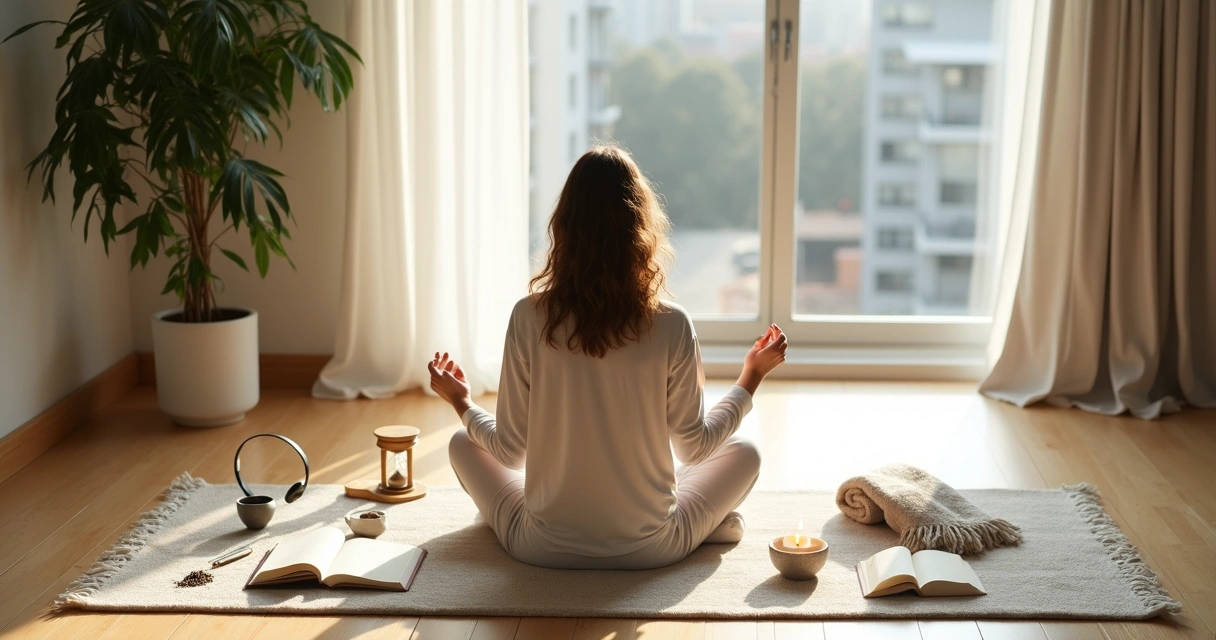

Presence is not a rare state that appears only in silence, prayer, or retreat. We see it as a daily skill. It shows in the way we answer a question, drink water, open a door, or pause before speaking. Small actions shape our inner climate. Then that climate shapes our day.
Many people think presence demands a long routine. We do not. In our experience, short acts repeated with honesty can change the tone of a whole afternoon. A few seconds. A clear intention. A body that comes back to now.
Presence grows in small returns.
Micro-habits are tiny actions that help us return to ourselves many times a day.
Below, we share 12 simple practices that can help us feel steadier, clearer, and less pulled by noise. None of them asks for much time. That is the point.
Why micro-habits work
A big promise often fails in real life because real life interrupts us. A micro-habit survives interruption. It fits into a crowded morning, a tense meeting, or a tired evening. It does not ask us to leave life. It asks us to meet life with more awareness.
We once watched someone change the mood of a whole room with one small pause before replying. No speech. No method explained. Just one breath, one softer tone, and a new direction. Presence works like that. Quietly, but with effect.
12 ways to return to the present
These habits work best when tied to moments that already happen each day, such as waking up, sitting down, eating, or checking a message.
-
Pause before getting out of bed.
Before your feet touch the floor, take one full breath and notice one feeling in your body. Not to judge it. Just to know where you are starting from.
-
Place one hand on your chest when your mind races.
This small touch gives the body a signal of safety. We find that physical contact with ourselves can interrupt mental speed better than argument does.
-
Exhale longer than you inhale.
Brief breath practice can shift our state fast. A remote randomized trial on daily five-minute breathwork found that breath practices, especially cyclic sighing, improved mood and lowered physiological arousal. Even one or two longer exhales can help us soften and return.
-
Feel your feet when you stand in line.
Instead of reaching for your phone, notice the contact between your feet and the ground. Pressure. Weight. Temperature. A waiting moment becomes a grounding moment.

-
Let one sip of water be fully conscious.
We do not need to make every meal ceremonial. Just choose one sip. Feel the glass, the temperature, the swallow. Simple acts can restore attention.
-
Open doors more slowly.
This sounds too small. Yet that is why it works. Each time you touch a handle, relax your jaw and lower your shoulders. The door becomes a cue to return to the body.
-
Look at one person without rushing.
When someone speaks, give them one extra second of full attention. Not staring. Just real listening. Presence in relationships often begins with the face becoming still.
-
Name your state in one word.
Try quiet words such as tense, open, dull, clear, tired, or steady. Naming our state can reduce confusion. It gives shape to what felt vague.
-
Clear one surface before starting work.
A desk corner, a notebook space, a kitchen counter. Outer order does not fix inner noise, but it can reduce friction. We think a cleaner visual field makes it easier to stay with one task at a time.
At this point, many people notice something surprising. Presence is not dramatic. It is often plain. Quiet. Almost easy to miss.
What is small can still guide the day.
-
Take three breaths before answering a hard message.
This habit protects us from reactive language. We have seen many avoidable conflicts begin with a fast reply sent from a tight chest and a tired mind.
-
Mark transitions with one reset.
Before moving from work to family time, or from one meeting to the next, stop for ten seconds. Stretch your neck, loosen your face, and choose how you want to arrive.
-
End one routine act with gratitude.
After washing your hands, finishing lunch, or turning off the light, say a quiet thank you. Not as performance. As orientation. Gratitude can turn habit into awareness.

-
Close the day with one line of reflection.
Write one sentence: “Today I felt most present when…” This trains memory to notice what supports awareness. Over time, patterns appear.
How to make these habits stay
We suggest keeping the approach light. If we turn a micro-habit into another burden, we lose its gift. Pick two or three, not all twelve. Tie them to fixed cues:
After waking up
Before opening a message
When sitting down to eat
When touching a door handle
Before sleep
The best micro-habit is the one we can repeat without strain.
If you miss a day, start again the next hour. Presence is not built by perfection. It is built by return. This changes the emotional tone of the practice. Less pressure. More honesty.
Conclusion
These 12 micro-habits work because they meet us inside ordinary life. They do not ask for ideal conditions. They ask for brief sincerity. A fuller breath. A slower hand. A clearer look. Bit by bit, such acts shape the way we inhabit our body, our speech, and our relationships.
When we practice presence in small forms, we often become less reactive and more available to reality. That can change a morning. Sometimes it can change much more.
Frequently asked questions
What are micro-habits for presence?
Micro-habits for presence are very small actions that bring our attention back to the current moment. They may last only a few seconds, such as taking one slower breath, feeling our feet on the ground, or pausing before we speak.
How can I start micro-habits today?
Start with one habit linked to an action you already do every day. For example, take one conscious breath before getting out of bed or before answering a message. Keep it simple enough that you can repeat it without effort.
Do micro-habits improve daily mindfulness?
Yes, micro-habits can improve daily mindfulness by creating many short moments of awareness throughout the day.
Instead of waiting for a long practice window, we train attention in real situations. That helps mindfulness become part of normal life, not something separate from it.
Which micro-habit is most effective?
The most effective one is usually the one that fits your day and state. For many people, a longer exhale works well because it calms the body quickly. For others, naming their feeling or pausing before replying brings the clearest shift.
How long until micro-habits show results?
Some effects can be felt at once, such as a calmer breath or less tension in the shoulders. Deeper changes often appear after days or weeks of repetition. We tend to notice that the mind returns faster, reactions soften, and awareness becomes more available under pressure.