


Trust rarely breaks in one loud moment. Most times, it fades in small exchanges. A rushed answer. A defensive tone. A promise left hanging. We have seen how people can care deeply for each other and still create distance through the way they speak, react, and avoid what feels hard.
Conscious communication is the practice of speaking with presence, listening with care, and taking responsibility for the effect of our words.
When we communicate this way, trust has room to grow. Not because every talk becomes easy, but because people start to feel safe. They feel seen. They feel less handled and more respected.
What trust needs from communication
Trust is not built by perfect language. It is built by coherence. Our words, tone, timing, and actions need to point in the same direction. When they do not, people notice it fast, even if they cannot explain why.
In our experience, trust grows when communication carries a few clear signals:
- Honesty without harshness
- Listening without hidden defense
- Clear boundaries without punishment
- Consistency between what we say and what we do
A person may say, “You can be open with me,” but react with anger the first time they hear something hard. The sentence sounds right. The presence does not. Trust follows presence.
People trust what feels consistent.
This shows up strongly in close relationships. Research in the Journal of Marriage and Family on couples’ communication and marital satisfaction notes that the quality of communication is widely assumed to shape later judgments of relationship satisfaction. We think this reflects a simple human truth: how we speak today influences how safe the bond feels tomorrow.
How unconscious communication weakens trust
Many people do not mean to create harm. They are tired, afraid, ashamed, or trying to protect themselves. Still, the effect lands on the relationship.
Unconscious communication often includes patterns like these:
- Interrupting to control the direction of the talk
- Using vague words to avoid real accountability
- Saying one thing while tone says another
- Deflecting pain with logic, jokes, or blame
We once heard a person say, “I am being honest,” while speaking with cold contempt. The content sounded truthful. The delivery made truth feel like attack. That is the difference conscious communication can change.
Trust weakens when communication becomes a tool for self-protection instead of connection.
That does not mean we must please everyone. It means we need to notice when our fear is driving the message. Awareness changes the tone before the tone changes the relationship.
Five practices that build trust
Trust-building communication is not abstract. It can be practiced. We can train it in daily conversations, in conflict, and even in silence.
Start with self-observation
Before we speak, we can ask: What is moving in me right now? Anger? Fear? The need to win? The wish to be understood? This pause is small, but it changes everything.
If we do not know our inner state, we tend to project it. Then the other person has to deal with our words and our unspoken charge.
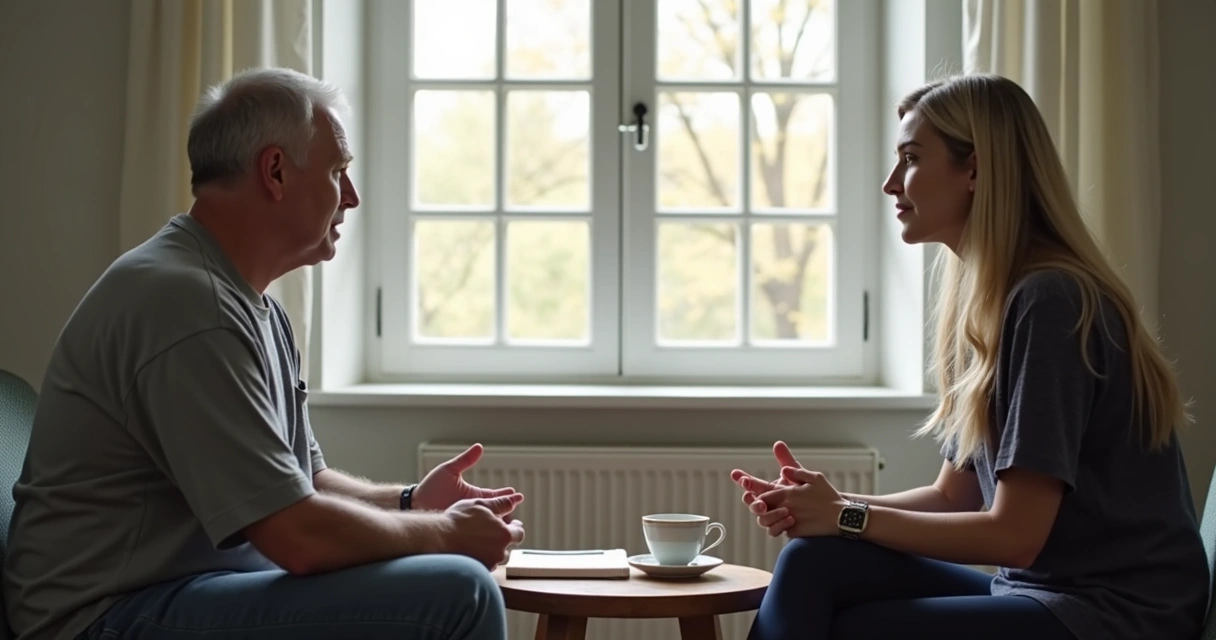
Listen for meaning, not only words
People do not always say exactly what they feel. Sometimes “I am fine” means “I do not feel safe enough to continue.” Conscious listening pays attention to pace, tension, and what is being avoided.
We can support this with simple responses:
- “I want to understand what this feels like for you.”
- “Can you say more about that?”
- “I hear your words, but I sense there is more.”
These lines are not techniques to control the talk. They are ways to make space.
Speak from ownership
Blame closes people. Ownership opens the door. Compare “You never listen” with “I feel dismissed when I am interrupted.” The second form does not erase tension, but it reduces attack and raises clarity.
Ownership means we describe our experience without making ourselves judge and jury of the other person’s character.
This matters because trust is tied to interpretation. A study from the Department of Psychology at St. Jerome's University found that attributional statements in high-trust relationships emphasized positive aspects of the relationship. We read this as a sign that trust is strengthened when people do not rush to assign the worst meaning to each other.
Match truth with kindness
Some people value honesty but forget care. Others value peace but hide the truth. Conscious communication asks for both. Truth without care can wound. Care without truth can mislead.
We think a good test is this: Can the other person feel my respect while I speak clearly? If not, something in the message still needs adjustment.
Repair quickly after rupture
Even strong relationships have moments of sharpness, silence, or misunderstanding. Trust does not depend on avoiding all rupture. It depends on repair.
Repair can sound like this:
- “I spoke from frustration, and I see the effect it had.”
- “That was not fair. I want to try again.”
- “You mattered in that moment, and I did not show it well.”
Short. Direct. Real.
Repair is trust in action.
Why affection and clarity both matter
Trust is not built only through serious talks. It also grows through warm everyday contact. Tone, gestures, eye contact, and kind words all shape safety over time.
Research published in Psychological Reports on affectionate communication and satisfaction found that people in dating relationships reported higher nonverbal and verbal affectionate communication than those in married relationships. We think this is a useful reminder. Familiarity can make people less expressive, even when care is still present. Trust often needs visible reassurance, not silent assumption.
This does not require grand gestures. It may be as simple as greeting with attention, thanking with sincerity, or asking a hard question with a soft face.

Context also shapes trust. A Pew Research Center analysis on trust in intimate relationships found that 84% of married adults reported a great deal of trust in their spouse’s faithfulness, compared with 71% of cohabiting adults. We do not reduce trust to status alone, but the finding does show that commitment, expectation, and shared meaning can influence how trust is felt and reported.
Conclusion
Building trust through conscious communication asks more from us than polished phrases. It asks presence. It asks self-honesty. It asks the courage to speak clearly without turning truth into force.
When we slow down, listen beyond our defense, and take responsibility for the effect of our words, relationships begin to change. The shift may look small at first. A calmer answer. A cleaner apology. A more open question. But these moments accumulate.
Trust grows when people feel safe enough to be real and steady enough to stay open.
We believe conscious communication is one of the most human ways to create that safety. Not by control, but by awareness. Not by performance, but by integrity.
Frequently asked questions
What is conscious communication?
Conscious communication is the practice of speaking and listening with awareness, honesty, and respect. It means we notice our emotions, choose words with care, and stay responsible for how our message may affect the other person.
How can I build trust through communication?
We can build trust by being consistent, listening fully, speaking with ownership, and repairing harm when it happens. Trust grows when our words, tone, and actions align over time.
What are the best trust-building techniques?
The strongest techniques include pausing before reacting, asking clear questions, reflecting what we heard, using “I” statements, and apologizing without excuses. These habits help people feel respected and safe.
Why is conscious communication important?
Conscious communication matters because relationships are shaped by repeated exchanges. When communication is reactive or unclear, trust weakens. When it is present and sincere, bonds become more stable and open.
How do I practice conscious communication daily?
We can practice it daily by slowing down before replying, noticing our tone, listening without interrupting, and naming feelings with honesty. Small daily moments are where trust is usually built or broken.