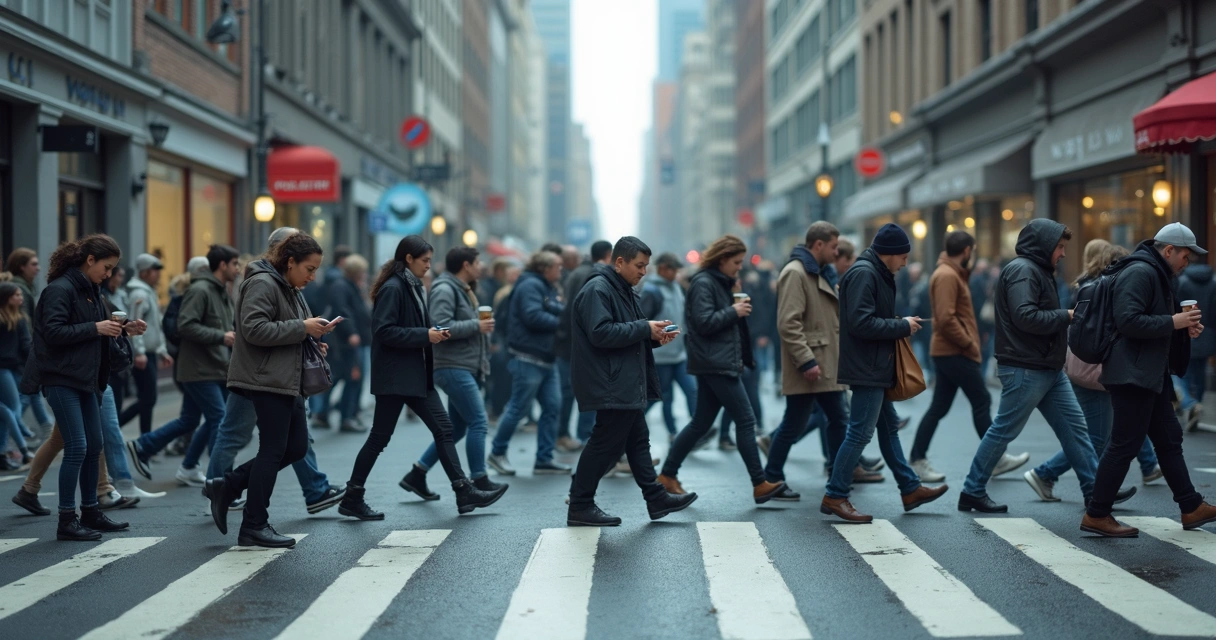
We often think our choices are fully personal. We choose what to buy, when to speak, whom to trust, and how much risk to take. Yet many of these choices are not born in private clarity. They are shaped by a shared emotional climate that enters the room before words do.
Collective anxiety is the tension a group carries together, even when nobody names it.
We see it in offices, families, schools, markets, and online spaces. A hard week of headlines, financial pressure, unresolved conflict, or social fear can create a background state that seems normal after a while. Then people start calling reactive choices “common sense.” That is where the invisible influence begins.
What shared tension does to the mind
When anxiety rises, the mind looks for safety first. It scans for threat, shortens patience, and reduces our space for reflection. A person may still look calm on the outside, but inside there is more urgency, more caution, and less openness.
We have seen this happen in small scenes. A team delays a new idea because the timing feels “uncertain.” A parent becomes stricter after a stressful month, even without meaning to. Friends avoid honest talks because nobody wants more friction. These do not always look like anxiety. They look practical. Still, the emotional field behind them is doing part of the choosing.
A 1999 study on anxiety and decision making reported that anxious people tend to choose lower-risk, lower-reward options. The pattern makes sense. When uncertainty feels threatening, the mind seeks relief before growth.
Fear often speaks in the voice of reason.
This does not mean caution is wrong. It means we need to notice when caution is wise and when it is driven by a shared state of alarm.
How it spreads without words
Collective anxiety rarely needs direct instruction. It travels through tone, speed, body language, silence, and repeated expectation. One person rushes. Another becomes guarded. A third starts imagining problems before they happen. Soon the whole group adapts.
We think this is one of the least noticed forces in daily life because it feels so ordinary. Nobody announces, “We are now making fear-based decisions.” Instead, people begin to act in similar ways:
They avoid risk even when the chance is reasonable.
They seek fast answers instead of better ones.
They copy the mood of the group to stay safe.
They read neutral events as warning signs.
Over time, this shared pattern shapes the culture of a home, team, or community. It becomes the emotional air everyone breathes.
Daily decisions that look personal but are not
Some of the strongest effects appear in ordinary moments. We may think of decision making as major life choices, but collective anxiety often works through small repeated acts.
Consider these common areas:
Money choices: People postpone plans, hold too tightly, or spend impulsively to soothe distress.
Work choices: Teams prefer familiar methods, avoid honest feedback, and reject ideas that feel too exposed.
Relationship choices: People withdraw, overreact, or agree too quickly to prevent tension.
Health choices: Some ignore rest, while others become hyper-alert to every bodily sign.
We have noticed that many people feel confused after these choices. They say, “I do not know why I said yes,” or “I am not sure why I panicked.” Often the answer is not hidden deep in personality alone. It is also present in the emotional atmosphere around them.

Why social choices change under anxiety
Our choices around other people are especially sensitive to collective emotion. Anxiety changes how we interpret faces, pauses, and intentions. A neutral reply may feel cold. A delay may feel like rejection. A hard conversation may feel dangerous before it even begins.
When a group is anxious, people do not only feel more stress, they also read each other through that stress.
A 2013 study on anxiety and social decision making found altered behavioral and bodily responses in anxious participants during social choice tasks. This helps explain why tense periods can distort trust, cooperation, and conflict management.
We have all seen versions of this. A simple message gets taken the wrong way. A meeting turns defensive. Someone stops sharing ideas because the room feels unsafe. These are not random social failures. They are signs that the group nervous system is shaping behavior.
How public mood enters private life
No one lives outside the wider emotional climate. News cycles, economic fear, cultural conflict, and constant exposure to urgency all affect the way people think. Even those who try to stay centered can absorb the pressure of a worried environment.
A 2014 commentary on collective emotion and behavior argued that mapping shared mood helps us understand collective behavior because mood shapes daily activity and decision processes. We agree with that view. Public emotion does not stay public. It enters homes, conversations, purchases, and plans.
Sometimes this appears in a very quiet way. A person stops making long-term decisions. Another refreshes updates all day and loses inner steadiness. A whole group becomes more reactive, yet nobody connects the pattern to collective anxiety.
What we repeat together starts to feel true.
How we can recognize it in real time
Recognition begins with slowing down enough to notice the state beneath the choice. We do not ask only, “What am I deciding?” We also ask, “What is the emotional field around this decision?”
In our experience, collective anxiety often shows itself through a cluster of signs rather than one clear symptom. We may notice:
Pressure to decide fast without clear reason.
Strong discomfort with uncertainty.
Group conversations that circle around worst-case outcomes.
Reduced creativity and lower tolerance for difference.
Relief seeking disguised as logic.
Once we notice the pattern, we gain a little distance from it. That distance matters. It creates room for awareness, and awareness interrupts automatic reaction.

Ways to reduce its influence
We cannot remove all shared anxiety from life. But we can stop letting it rule our choices. The first move is not control. It is presence.
These practices often help:
Pause before agreeing, reacting, or refusing.
Name the mood in the room without blame.
Separate facts from imagined outcomes.
Delay non-urgent decisions when the group is emotionally flooded.
Return to the body through breath, posture, and silence.
A calmer state does not guarantee a perfect decision, but it gives us back freedom of choice.
Conclusion
Collective anxiety shapes daily decision making because human beings do not choose in isolation. We choose inside families, teams, systems, and public moods that affect our thoughts before we notice them. When shared fear grows, people become more cautious, reactive, and socially defensive. They may call those choices practical, but many are attempts to escape inner tension.
We think the real shift begins when we learn to detect the emotional climate behind our habits. Then our decisions can become less driven by pressure and more guided by awareness. That is a quieter path, but a truer one.
Frequently asked questions
What is collective anxiety?
Collective anxiety is a shared state of tension, fear, or unease present in a group, community, or social environment. It may come from uncertainty, conflict, financial pressure, or repeated exposure to alarming events. People do not need to speak about it for it to affect behavior.
How does collective anxiety affect choices?
It affects choices by pushing people toward safety, speed, and relief. Under shared anxiety, many become more risk-avoidant, less reflective, and more likely to follow group mood. This can lead to defensive choices in money, relationships, and daily planning.
Can collective anxiety impact work decisions?
Yes. It can make teams avoid new ideas, postpone honest conversations, and prefer familiar options even when better paths exist. In tense workplaces, people may choose based on emotional safety rather than clear judgment.
How can I recognize collective anxiety?
You can recognize it by noticing patterns such as pressure to decide quickly, repeated worst-case thinking, emotional reactivity, low tolerance for uncertainty, and a group tendency to confuse fear with logic. If many people around you seem tense in similar ways, a shared emotional state may be present.
What are ways to reduce collective anxiety?
Helpful ways include slowing decisions when possible, naming tension directly, returning attention to the body, limiting exposure to repeated alarm, and creating spaces for honest and calm conversation. Small pauses can reduce the power of group fear and support clearer choices.