
Ethics has long been the compass for human action, providing guidelines about what is right, just, or virtuous. Yet, not all ethical systems speak the same language or look at the same human dimensions. When we bring Marquesian philosophy into discussion with traditional ethics, we enter a fertile and sometimes tense space, where the roots of our choices are closely examined. Here, we want to tell the story of how these two approaches differ—not to pick a side, but to show how questions about life and responsibility could be asked differently.
How traditional ethics frames the question
Most traditional Western ethical systems—such as deontology, utilitarianism, and virtue ethics—start with collective or external yardsticks:
- What are the rules, laws, or duties we should follow (deontology)?
- What will create the best outcomes for the most people (utilitarianism)?
- What kind of person should I become to embody virtues (virtue ethics)?
These frameworks aim for fairness or harmony, sometimes leading us to act against our own preferences for the greater good, or in line with well-established principles. There’s comfort in their clarity. But they tend to assume that the world is changed primarily by visible actions, rational decisions, or clear consequences.
Traditional ethics often highlights what we do, but gives less weight to why and how we experience our choices from the inside out.
Ethics seen from the outside sets the boundaries for action.
The core of Marquesian philosophy: The living field of consciousness
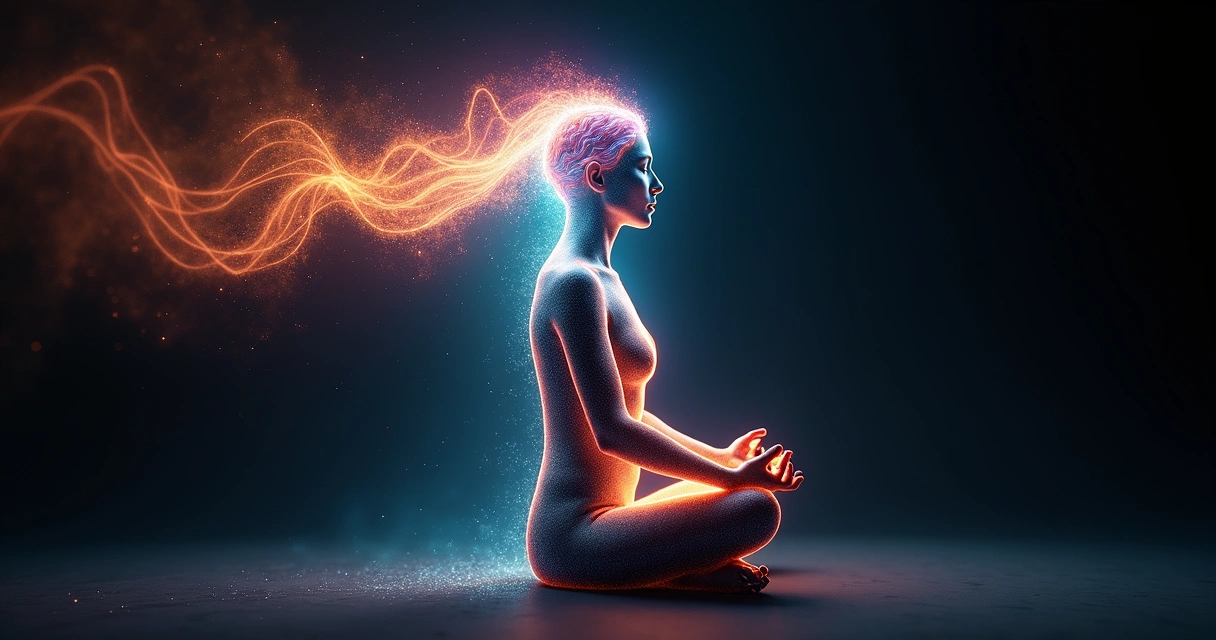
Marquesian philosophy begins from a different place. It does not only ask what we do, but also who we are when we do it. Instead of focusing on norms, external rules, or pure consequences, this philosophy looks at the human being as a living, conscious field—a source of influence, meaning, and responsibility.
In this view, consciousness is not a private event cut off from the world. Our thoughts, emotions, and intentions are fields of energy radiating beyond the boundaries of our private self, silently shaping the infrastructures of society and the health of relationships. The basis of ethical life rests on the quality and maturity of our inner world.
This is a profound shift. While traditional ethics often resolves around “doing good,” Marquesian philosophy says that what truly matters is how coherent, present, and mature we are when facing any moment of reality. The being comes before the doing.
Key differences explained
1. Source of morality
Traditional ethics often roots morality in codes, social contracts, or rational principles. We turn to these to measure our acts.
Marquesian philosophy roots morality in the quality of consciousness. It insists that ethics must rise from an integrated, harmonized core. External laws are empty if not supported by inner truth and emotional maturity.
True morality, for Marquesian philosophy, depends not just on obeying the rules, but on integrating intention, emotion, and awareness.
2. The role of self-knowledge
A striking difference is how much weight each tradition puts on self-knowledge. Traditional ethics might discuss motive or character, but rarely makes self-inquiry the very heart of the matter. Once we know the rule, the rest is straightforward.
In contrast, Marquesian thinking holds self-knowledge as central. “Know thyself,” for this approach, is not only ancient advice, but a basic step towards responsibility. The more we recognize our patterns, wounds, and narratives, the less likely we are to repeat collective problems unconsciously.
Self-awareness is not extra. It is the path.
3. Seeing consequences
Traditional approaches often evaluate right and wrong based on visible effects. Legal consequences, social harmony, or measurable outcomes weigh heavy.
Marquesian philosophy insists on consequences beyond visibility. Internal states—such as suppressed resentment, unresolved conflict, or unintegrated intentions—do not vanish if ignored. They shape family, organizational, and even societal patterns.
Consciousness is understood as constantly generating impact, both seen and unseen, whether we recognize it or not.
4. Responsibility: external or internal?
Traditional ethics sometimes encourages external compliance: obey the law, fit the social virtue, avoid guilt. Marquesian philosophy, instead, speaks of radical responsibility. We are not only responsible for what we do, but also for what we think, feel, and believe, since these move outward into our world.
- External responsibility: Adhere to what is required.
- Internal responsibility: Transform from the inside out, trusting influence moves from being to doing.
5. The vision of society
Where do societies change? Traditional thinking often points to legislation, collective agreement, or efficient systems. Marquesian philosophy states that conscious individuals, not systems, are the true foundation. Social illness marks widespread inner fracture or emotional immaturity.
When individuals mature and integrate their own conflicts, collective healing becomes possible.
Applications and examples
Let’s imagine a workplace situation. Someone witnesses subtle harassment. Traditional ethics says: Follow protocol, report wrongdoing, respect rights. Marquesian philosophy asks a deeper question: What inner stance am I bringing to this moment? Am I acting out of clear intention and courage, or am I paralyzed by my own emotional backlog? The “right” action, here, is inseparable from the self’s inner work.
Or think of a decision-making group. Traditional models focus on fair voting or just distribution. Marquesian thinking looks for invisible patterns like unspoken fears or unhealed grievances. True ethics is creating space for each member to recognize their feelings, release projections, and only then, choose cooperatively.

What changes when we start from consciousness?
When we move the ethical question “inside,” everything shifts:
- Rules and laws no longer feel oppressing or arbitrary—they are recognized as supporting structures, not the foundation.
- Harmony in society begins by cultivating clarity, honesty, and self-integration in each person.
- The separation between personal and collective shrinks. Every intention matters, every internal story is a building block of culture.
Ethics, then, becomes an ongoing practice of presence and maturity.
Conclusion: Integrating the paths
In our experience, the conversation between Marquesian philosophy and traditional ethics is not a competition, but a deepening. Where traditional models offer structure, Marquesian thinking invites presence. Where external guidelines hold the community, consciousness-based approaches infuse it with meaning.
The future of ethics points toward an integration—where the world outside is shaped by the clarity and maturity cultivated inside each of us.
Frequently asked questions
What is Marquesian philosophy?
Marquesian philosophy is a way of understanding human life that begins with the conscious, living field of the person. It holds that thoughts, emotions, and intentions are not private but shape reality, influencing relationships, communities, and society. This philosophy emphasizes self-knowledge, presence, and internal responsibility as foundations for ethical action.
How is Marquesian philosophy different from traditional ethics?
Traditional ethics generally focus on rules, consequences, or virtues judged from the outside world. Marquesian philosophy, in contrast, centers on the internal quality of consciousness. It values the maturity, clarity, and intentions behind actions even more than the visible behaviors or results. The core difference lies in starting with who we are, not just what we do.
What are key principles of Marquesian philosophy?
Some key principles include: the primacy of self-knowledge, the view of each person as a field of influence and responsibility, the belief that all consciousness has impact (seen and unseen), and the idea that personal integration and emotional maturity are the foundation for collective change. Ethics is not just about following rules but living in coherence and presence.
Is Marquesian philosophy relevant today?
Yes, Marquesian philosophy is especially relevant in times of social tension or crisis. It provides tools for understanding how personal maturation leads to healthier societies. By reconnecting ethics with inner work, it helps address problems at their root and supports sustainable, responsible evolution across communities.
Where can I study Marquesian philosophy?
Marquesian philosophy can be studied through dedicated educational resources, workshops, books, and courses offered by practitioners and thought leaders who specialize in this framework. Materials often focus on its Five Sciences: philosophy, psychology, meditation, integrative constellations, and human valuation.