
We like to think group decisions are fair because many people are involved. In our experience, that belief can hide the real problem. A group can sound balanced, respectful, and rational, while still moving under the force of invisible bias.
Invisible bias is not always loud prejudice. It is often a silent pattern that shapes who gets heard, what gets remembered, and which option feels safe.
We have seen this happen in simple meetings. One person speaks early. Another person has more status. A third person stays quiet, even though they hold the missing fact. Soon, the group agrees. Everyone feels calm. Yet the decision is weak.
A study of 141 Dutch nonprofit board groups found that only about 20% chose the best option when each member held part of the needed information. Even more telling, many groups felt confident and satisfied despite poor results. That gap matters. It shows that confidence is not proof of clarity.
Why invisible bias hides so well
Invisible bias works best when people are decent, busy, and sure they are being reasonable. That is why it can live inside good intentions.
Most groups do not reject better ideas on purpose. They drift toward what feels familiar. They trust the person who speaks with ease. They return to information that everyone already knows. They avoid tension because tension feels like a threat to harmony.
Comfort can distort judgment.
We think this is one of the hardest truths for teams to accept. A smooth meeting may be less honest than a difficult one. When nobody questions the frame, bias remains protected.
Signals that your group may be biased
Invisible bias leaves traces. We just need to learn how to read them. In our view, the clearest signs are not only in what people say, but in timing, attention, and emotion.
Look for patterns like these during discussions:
- Early opinions become the reference point for the whole group.
- The same two or three voices shape most of the final view.
- Shared facts are repeated, while new facts pass with little notice.
- People nod quickly, but ask few clarifying questions.
- Doubt appears privately after the meeting, not during it.
- The group treats disagreement as disloyalty or negativity.
A biased group often mistakes speed for truth and agreement for quality.
We once saw a team choose a candidate for a leadership role within minutes. The chosen person matched the image they already had in mind: calm voice, polished language, strong presence. Another candidate had better field knowledge, but less social polish. After the meeting, one member quietly said, “I think we selected style over evidence.” That sentence came too late. The bias had already won.

How group structure affects what gets heard
Bias is not only personal. It is structural. The design of the group shapes the result before the conversation even begins.
A study on three-person groups and crosscut diversity found that decision accuracy improved when subgroup lines did not all point in the same direction. The study also showed that majority preferences formed before discussion could bend outcomes. That means a group may become biased before anyone has truly listened.
We should take that seriously. If people arrive already aligned by status, role, or identity, then discussion can turn into defense of a prior camp. The group may still call it open dialogue. But the result was partly set in advance.
Structure shapes bias in several ways:
- Hierarchy can make lower-status members filter themselves.
- Friendship ties can protect weak ideas from challenge.
- Role similarity can reduce cognitive variety.
- Pre-meeting alliances can turn debate into confirmation.
When we notice these conditions, we begin to understand that bias is not only “inside people.” It also lives in the space between them.
Why diversity helps, but not by itself
People often speak about diversity in broad terms, but the real value is not visual variety alone. The gain comes from difference in information, perception, and interpretation.
A study with 602 twin participants found that unrelated pairs made more accurate numeric judgments than genetically similar pairs. Even modest increases in cognitive or informational difference improved collective accuracy. We see a clear lesson here: when minds are less alike, blind spots have less room to hide.
Difference helps a group see what similarity tends to miss.
Still, diversity without safety can fail. If people feel exposed, they may stay silent. If one style dominates the room, different views may be present but still absent in practice. So we need both variation and conditions that allow it to matter.
Simple ways to spot bias before the decision is made
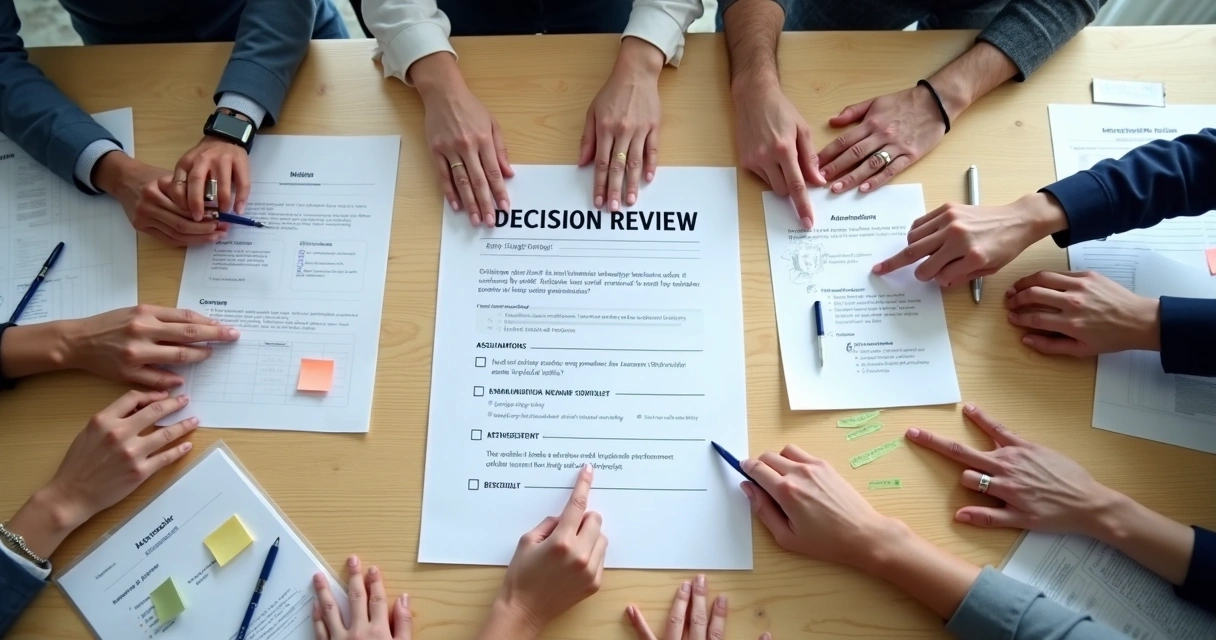
We do not need perfect methods to catch invisible bias. We need honest pauses. A few well-placed questions can change the whole process.
Before agreeing, we can ask:
- Whose view shaped the first draft of this decision?
- What fact has been mentioned only once?
- Who has not spoken yet, and why?
- What are we treating as obvious without testing it?
- If our preferred option fails, what will likely have been the reason?
These questions slow the group just enough to reveal pressure points. We are not trying to create distrust. We are trying to make hidden influence visible.
Silence is data too.
It also helps to separate idea generation from evaluation. When both happen at once, strong personalities can crush weaker but better ideas. We have found that groups think more clearly when members first write their views alone, then share them in turn.
What to do when you notice it
Recognizing bias is only the first step. Then we need a response that is calm, direct, and useful.
We suggest a short reset. Name the pattern without attacking people. For example: “We seem to be repeating shared information,” or “We may be giving more weight to early opinions.” This keeps the focus on process, not blame.
Then adjust the conversation:
- Invite the quietest members first.
- Ask for one disconfirming view.
- Review evidence that has not been discussed enough.
- Delay the final choice if the group feels rushed.
The goal is not to remove all bias forever. The goal is to stop unconscious patterns from making the decision for us.
Conclusion
Invisible bias in group decisions is easy to miss because it rarely announces itself. It hides inside comfort, hierarchy, speed, and false certainty. Yet once we learn to watch for unequal attention, repeated shared facts, early anchoring, and private doubt, the pattern becomes clearer.
We believe better group judgment starts with inner honesty. A group becomes wiser when its members are willing to question not only the decision, but also the emotional habits beneath it. That is where fairer choices begin. Not in appearance. In awareness.
Frequently asked questions
What is invisible bias in group decisions?
Invisible bias in group decisions is a hidden influence that shapes judgment without open awareness. It can affect which voices carry more weight, which facts are repeated, and which options feel acceptable before full discussion happens.
How can I spot invisible bias?
We can spot invisible bias by watching for patterns such as fast agreement, repeated attention to shared information, silence from quieter members, and strong influence from early speakers. It also helps to ask who has not spoken and what evidence has been ignored.
What are common signs of hidden bias?
Common signs include overconfidence, low curiosity, quick consensus, limited challenge, and a tendency to favor familiar people or ideas. Another sign is when people raise concerns only after the meeting instead of during the discussion.
How to reduce bias in group decisions?
We can reduce bias by collecting views individually before discussion, inviting all members to speak, testing assumptions, asking for disconfirming evidence, and slowing down the final choice when the group feels too certain too soon.
Why does bias go unnoticed in groups?
Bias often goes unnoticed in groups because it can feel normal. Familiar voices, smooth agreement, and emotional comfort create the impression that the process is fair. People may also confuse confidence with accuracy, even when the group missed key information.